
Omega-3 fatty acids are among the most researched nutrients in the world — and for good reason. They support heart health, brain function, inflammation balance, and even skin vitality. But despite their importance, most people have no idea how much Omega-3 they actually need each day. There has been a lot written about why Omega-3 matters for your general health, you can read more about that topic here.
How Much Omega-3 Do You Really Need?
Two of the world’s most respected health authorities — The World Health Organization (WHO) and the European Food Safety Authority (EFSA) — agree on a clear daily intake recommendation:
Adults should consume 250–500 mg of EPA + DHA per day.
EPA + DHA are the active forms of Omega-3 found in:
-
Fatty fish (salmon, mackerel, sardines)
-
Algae
-
High-quality Omega-3 supplements
What is important about the above is that:
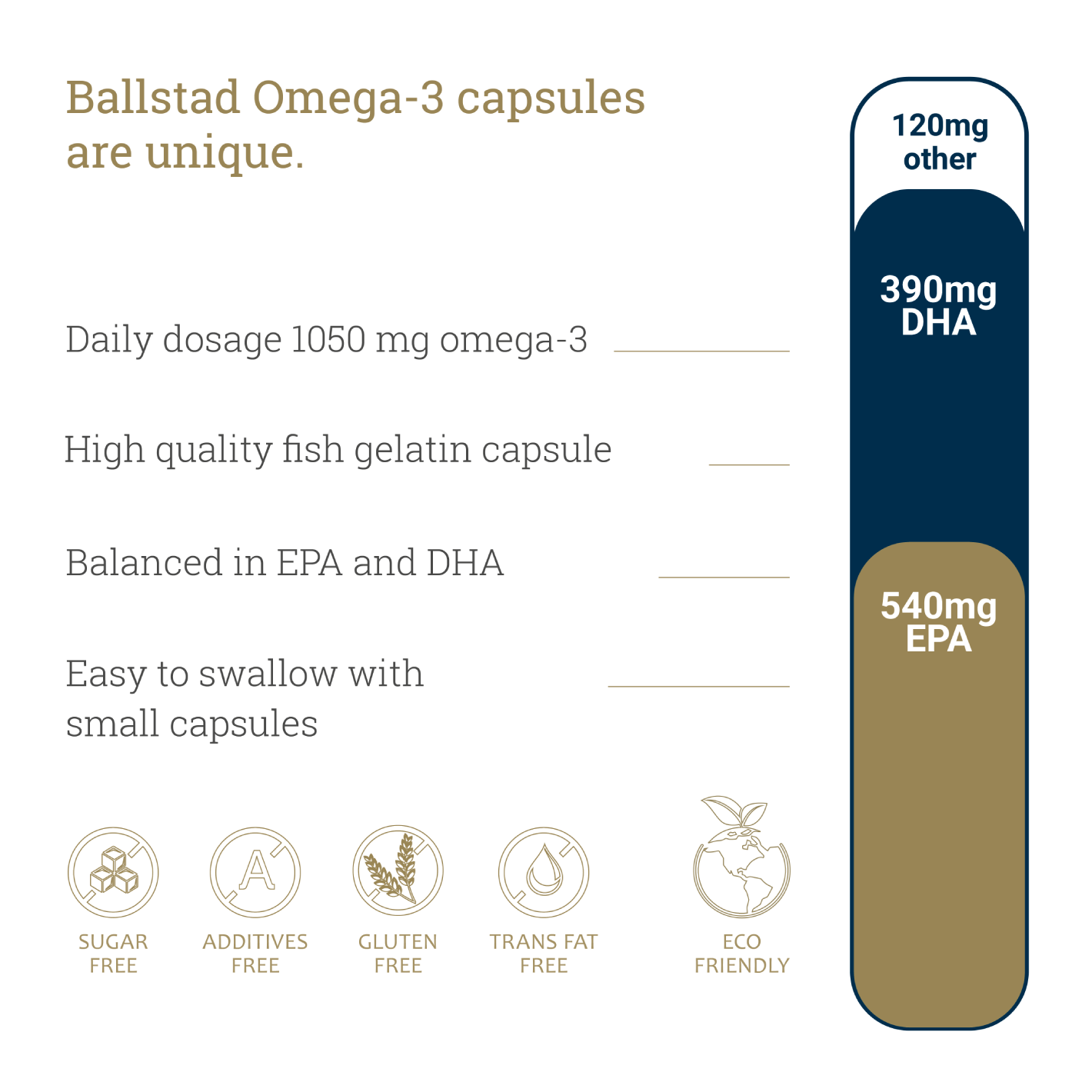
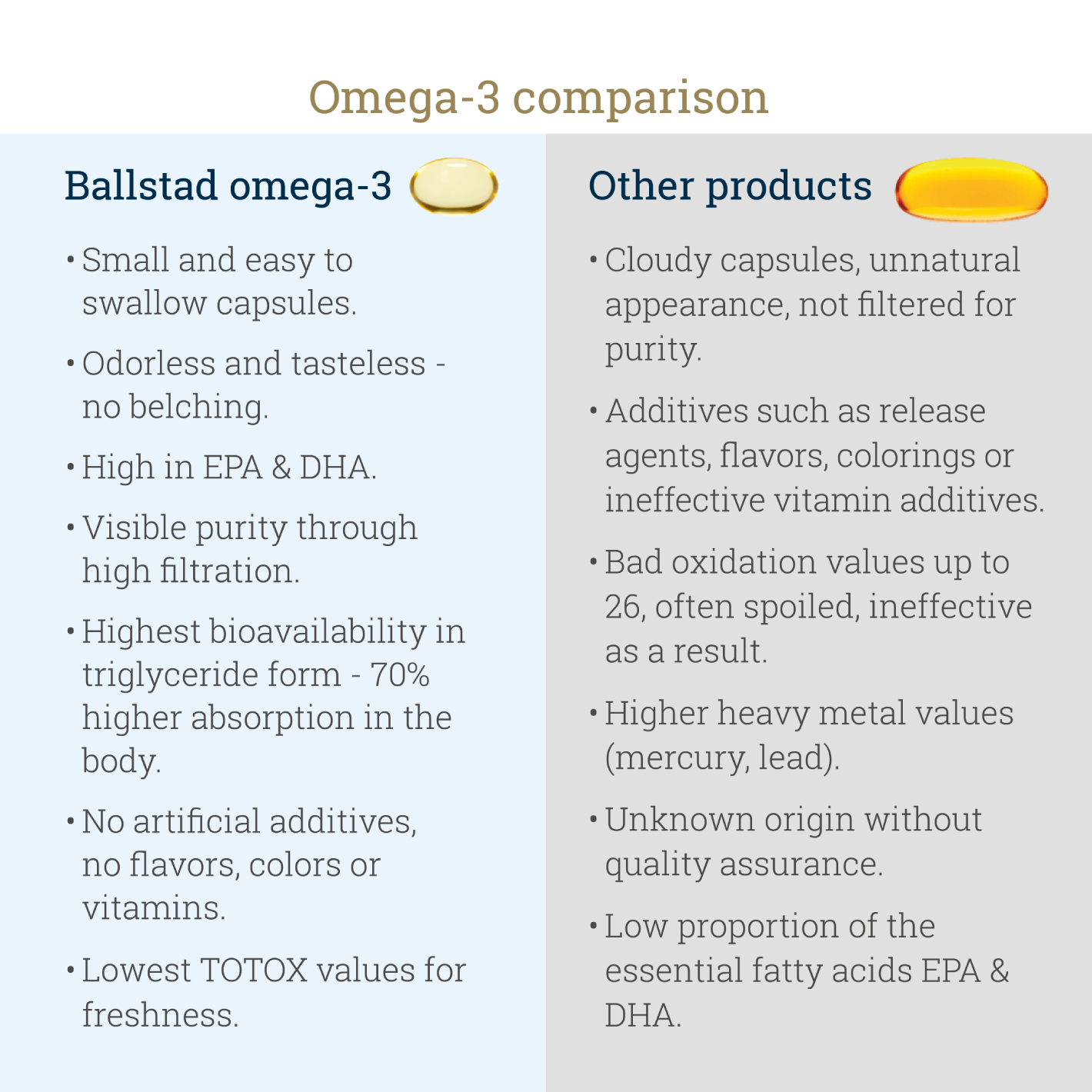
The recommendation applies to EPA + DHA — not total fish oil.
Many people assume that a capsule labeled “1000 mg fish oil” provides 1000 mg of Omega-3s. It does not. Only a portion of that oil contains EPA and DHA, and the amount varies widely between products.
Why EPA and DHA Matter More Than Total Fish Oil
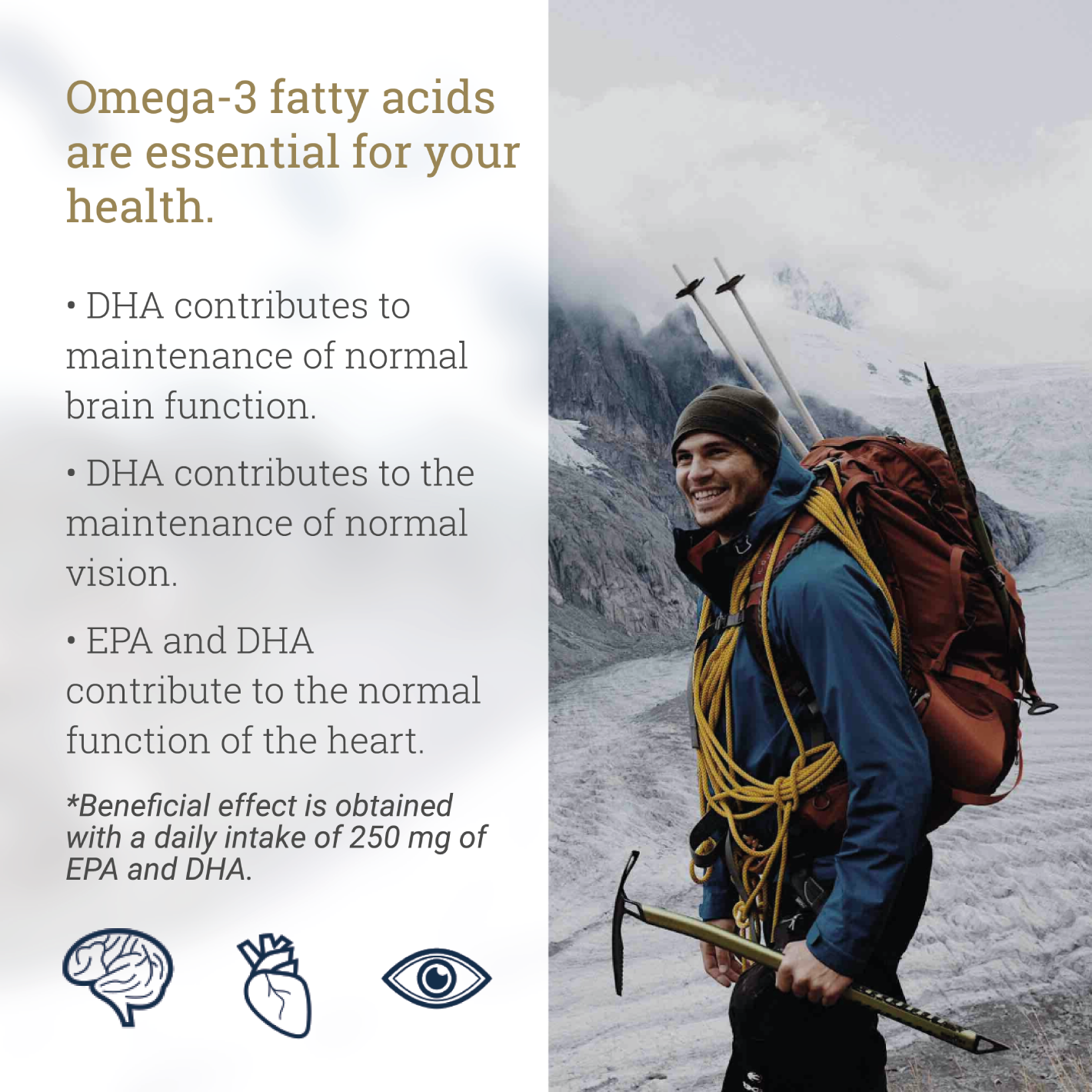
EPA (eicosapentaenoic acid) and DHA (docosahexaenoic acid) are the Omega-3s your body actually uses for:
-
Heart and cardiovascular health
-
Brain and cognitive function
-
Eye health
-
Inflammation regulation
-
Skin barrier and hydration support
Fish oil is simply the carrier — EPA and DHA are the active ingredients.
Are You Getting Enough Omega-3?
Most people are not.
Modern diets tend to be low in fatty fish and high in Omega-6 fats, which creates an imbalance that can affect inflammation, mood, and long-term health.
Signs you may be low in Omega-3 include:
-
Dry skin
-
Poor concentration
-
Low mood
-
Joint stiffness
-
Brittle hair or nails
While these symptoms can have many causes, Omega-3 deficiency is surprisingly common.
How to Meet Your Daily Omega-3 Needs
Here’s what 250–500 mg of EPA + DHA looks like in real life:
-
A high-quality Omega-3 supplement providing at least 250–500 mg of EPA + DHA per daily dose
Read more about nutrition and other Omega-3 trends for 2026 here.
Why This Matters for Long-Term Health
Meeting your daily Omega-3 requirement supports:
-
Heart health
-
Brain performance
-
Mood balance
-
Eye health
-
Skin elasticity and hydration
-
Healthy inflammation response
It’s one of the simplest, most impactful nutrition habits you can adopt.
Understanding the difference between total fish oil and active Omega-3 content helps you make smarter choices for your health, your skin, and your long-term well-being.
"This content is for informational purposes only and is not intended to diagnose, treat, cure, or prevent any disease."
Scientific References used in this article:
https://ods.od.nih.gov/factsheets/Omega3FattyAcids-HealthProfessional/