
Heart health remains one of the most widely researched areas in modern nutrition science. Among the nutrients consistently discussed in this field, Omega 3 fatty acids stand out for their role in the body’s normal lipid structures and cellular systems. At Ballstad, we believe that clarity, science, and quality should guide every conversation about wellness — especially when it comes to the heart.
Why Omega 3 Continues to Be Central in Heart Health Research
Omega 3 fatty acids, particularly EPA and DHA, have been studied for decades due to their involvement in the body’s normal physiological processes. One of the reasons they remain so relevant is their natural incorporation into cell membranes, including those found in tissues related to cardiovascular function.
Because the heart relies on coordinated cellular activity and balanced lipid structures, EPA and DHA continue to be a recurring topic in scientific discussions surrounding cardiovascular health.
What the Science Says About EPA & DHA
Research in nutrition and cardiovascular science has explored how Omega 3 fatty acids interact with:
• Normal lipid metabolism
• Cell membrane structure and fluidity
• Cardiovascular cellular systems
• Biological pathways related to heart function
This scientific interest is not new — it spans decades of biochemical, nutritional, and clinical research. While findings vary across studies, the consistent theme is that EPA and DHA play a role in the body’s normal physiological processes, which is why they remain under active investigation.
The European Food Safety Authority (EFSA) states that EPA and DHA contribute to the normal function of the heart, with a daily intake of 250 mg of EPA + DHA. This recognition keeps Omega 3 firmly in the spotlight of modern nutrition science and reinforces its relevance in discussions about everyday cardiovascular well being.
It is important to note that this is a general, population level statement — not a medical treatment claim — and is based on the physiological role of these fatty acids in the body.
Ballstad’s Approach: Freshness, Purity, and Precision
At Ballstad, we focus on what we do best: producing Omega 3 in small, always fresh batches, crafted for those who value purity, transparency, and uncompromising quality.
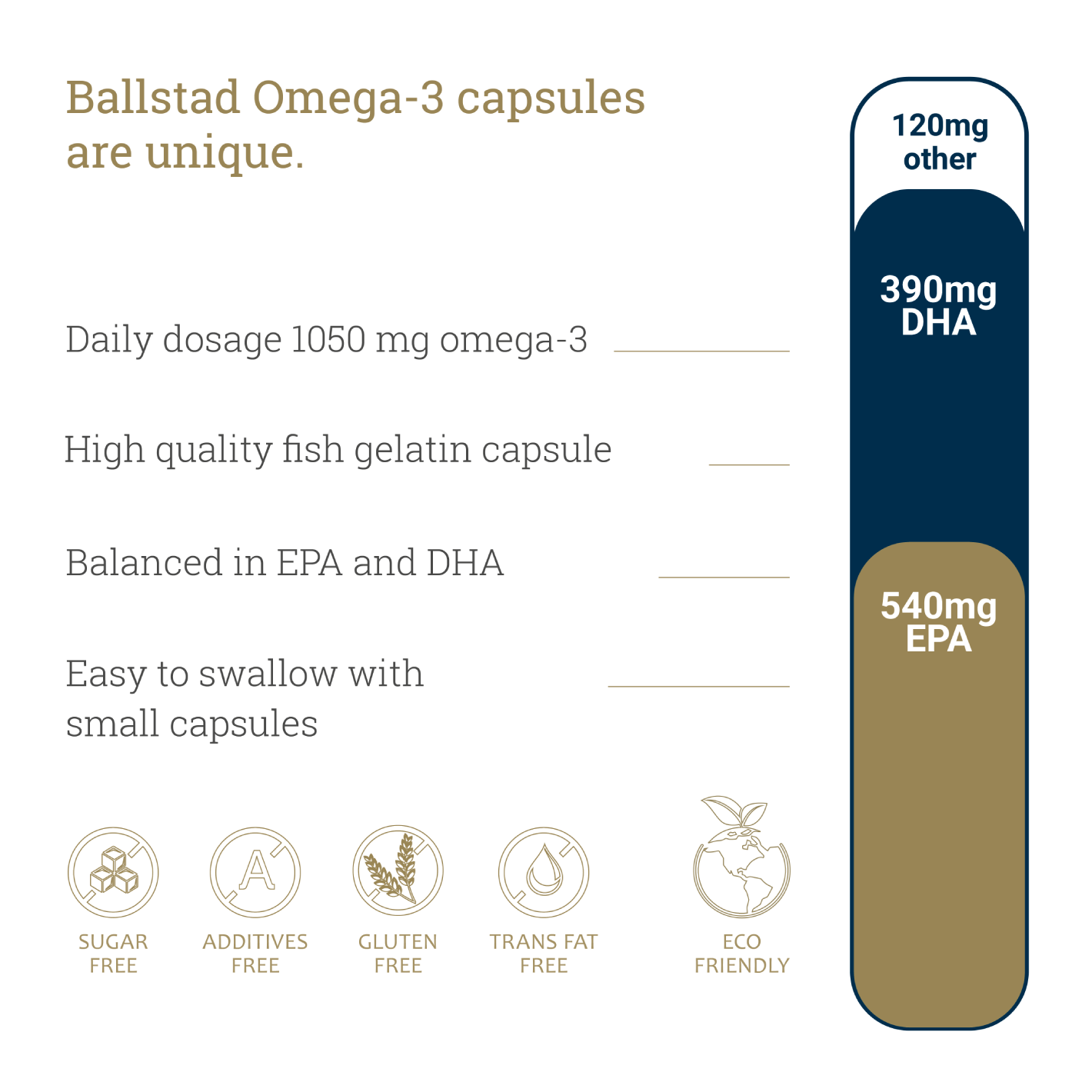
Each daily serving of Ballstad Omega 3 delivers:
• 540 mg EPA
• 390 mg DHA
• 120 mg DPA
• Total: 1050 mg Omega 3
This carefully balanced profile reflects our commitment to freshness and precision — qualities that matter when producing oils intended to support everyday nutritional needs.
While Omega 3 is not a treatment or cure for cardiovascular conditions, scientific literature provides a useful framework for understanding why it remains a topic of interest:
• EPA and DHA are incorporated into cell membranes.
• They participate in normal lipid related processes.
• They are involved in biological pathways relevant to cardiovascular systems.
• They have been studied extensively in relation to heart related scientific questions.
This is why Omega 3 continues to appear in research, reviews, and expert discussions about nutrition and cardiovascular physiology.
Want to do more reading about Omega-3, why it matters and why it should be an important part of the daily routine? Check out our other blogs on our website.
Scientific References
These references support the scientific context described above. They do not imply medical claims or treatment effects.
• European Food Safety Authority (EFSA). Scientific Opinion on the substantiation of health claims related to EPA and DHA and contribution to the normal function of the heart. EFSA Journal, 2010.
• Calder, P. C. Omega 3 fatty acids and cardiovascular disease: evidence explained and mechanisms explored. Clinical Science, 2004.
• Mozaffarian, D., & Wu, J. H. Y. Omega 3 fatty acids and cardiovascular disease: effects on risk factors, molecular pathways, and clinical events. Journal of the American College of Cardiology, 2011.
• Stillwell, W., & Wassall, S. R. Docosahexaenoic acid: membrane properties of a unique fatty acid. Chemistry and Physics of Lipids, 2003.
"This content is forinformational purposes only and is not intended to diagnose, treat, cure, or prevent any disease. "