
Omega-3-tilskudd finnes overalt – fiskeolje, krillolje, algeolje, triglyseridform, etylesterform, med smak, uten smak... listen er lang. Men ikke alle Omega-3 er like. Hvis du ønsker reelle fordeler for ditt hjerte, hjerne, ledd og generelle helse, må du vite hva du faktisk kjøper.
Her er en enkel, vitenskapelig basert veiledning som hjelper deg med å velge det riktige Omega-3-tilskuddet med selvtillit.
1. Se på kilden
Det første du må sjekke er hvor Omega-3-en kommer fra. Forskjellige kilder tilbyr ulike renhetsnivåer, bærekraftsprofiler og næringssammensetninger.
Vanlige Omega-3-kilder
-
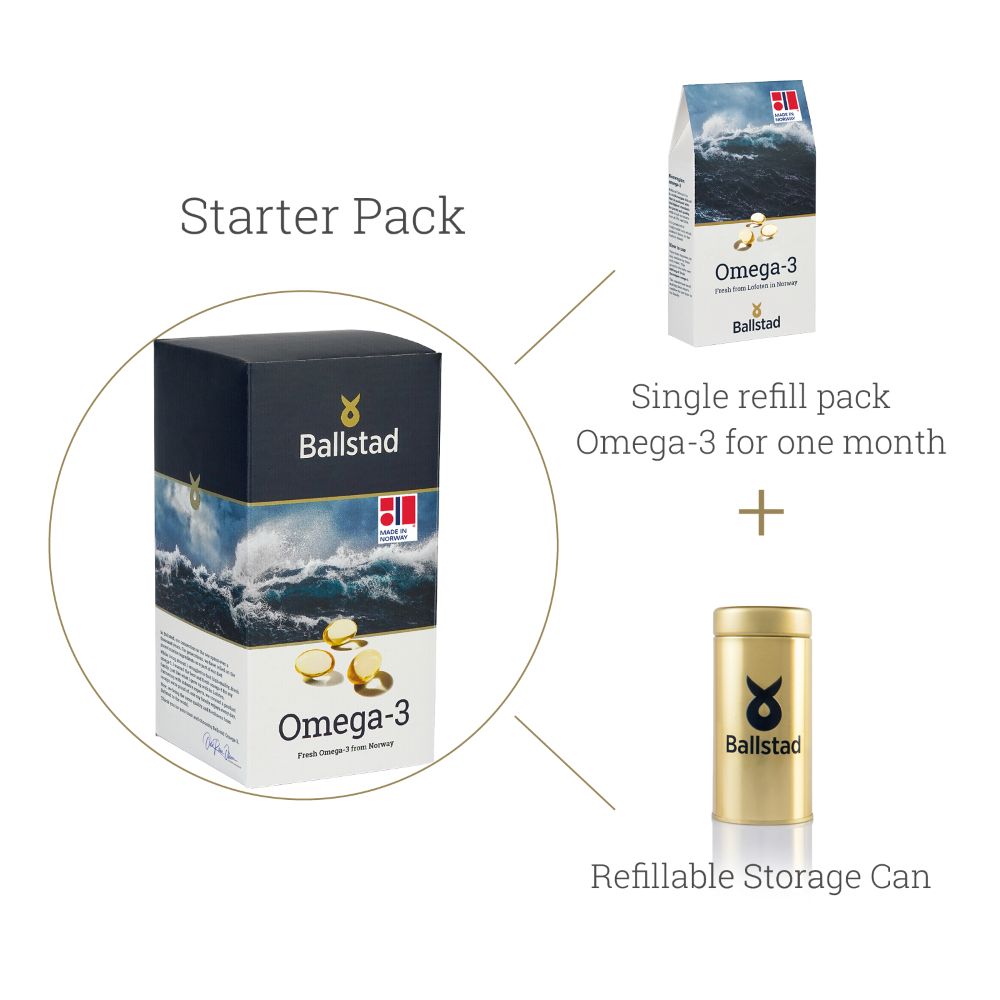
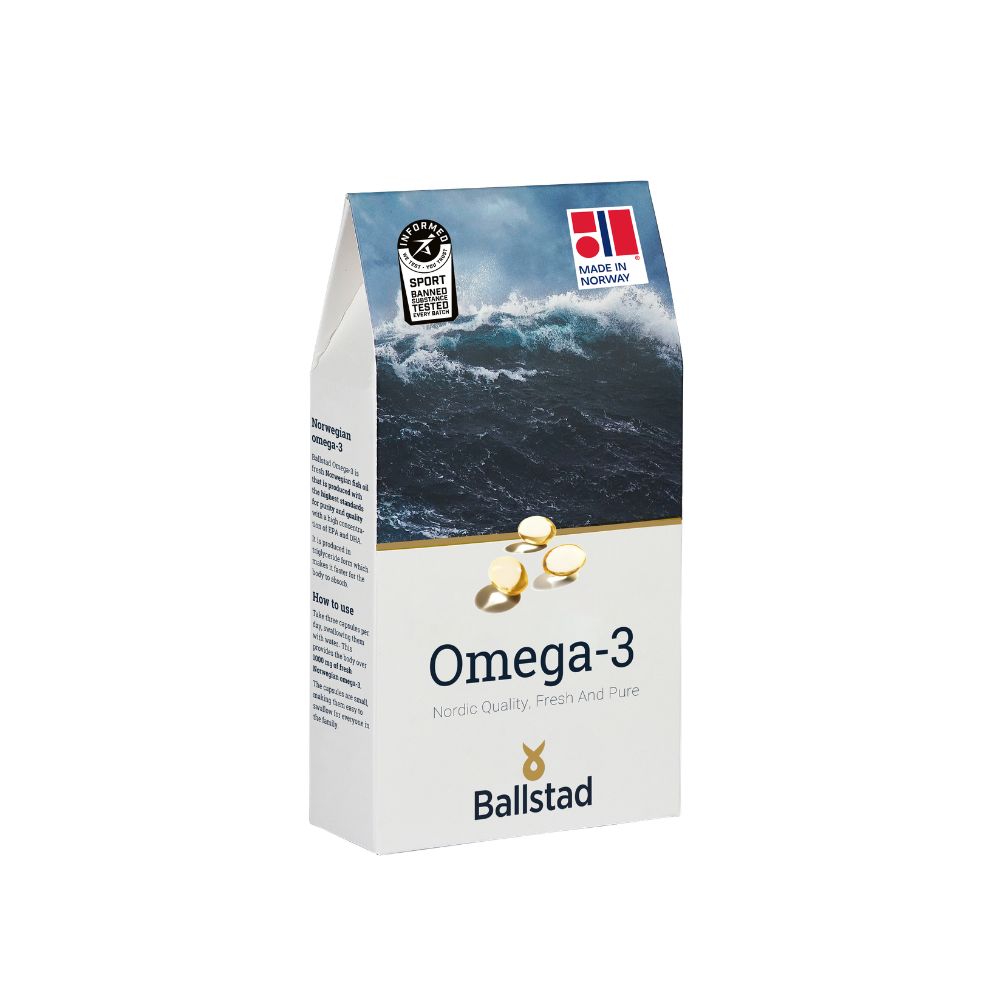
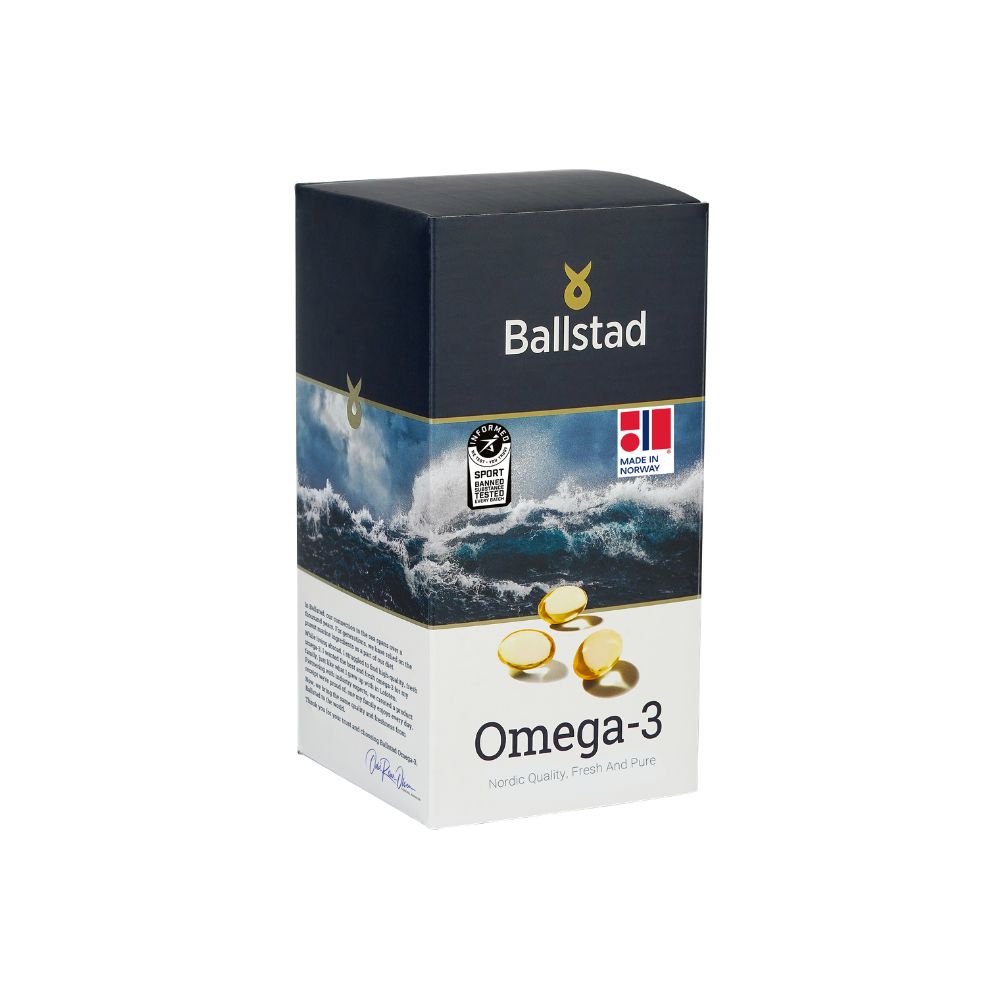
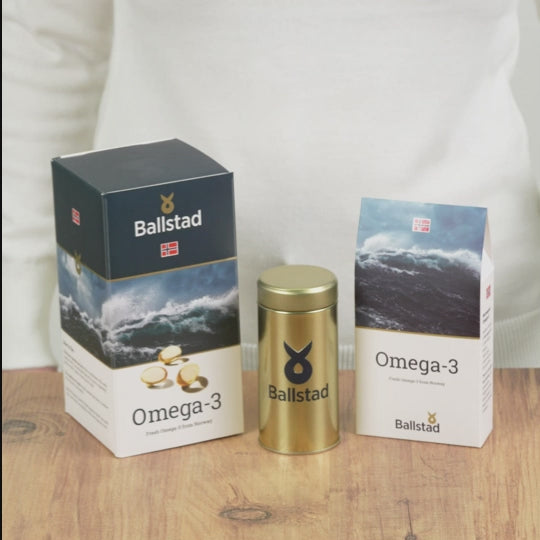
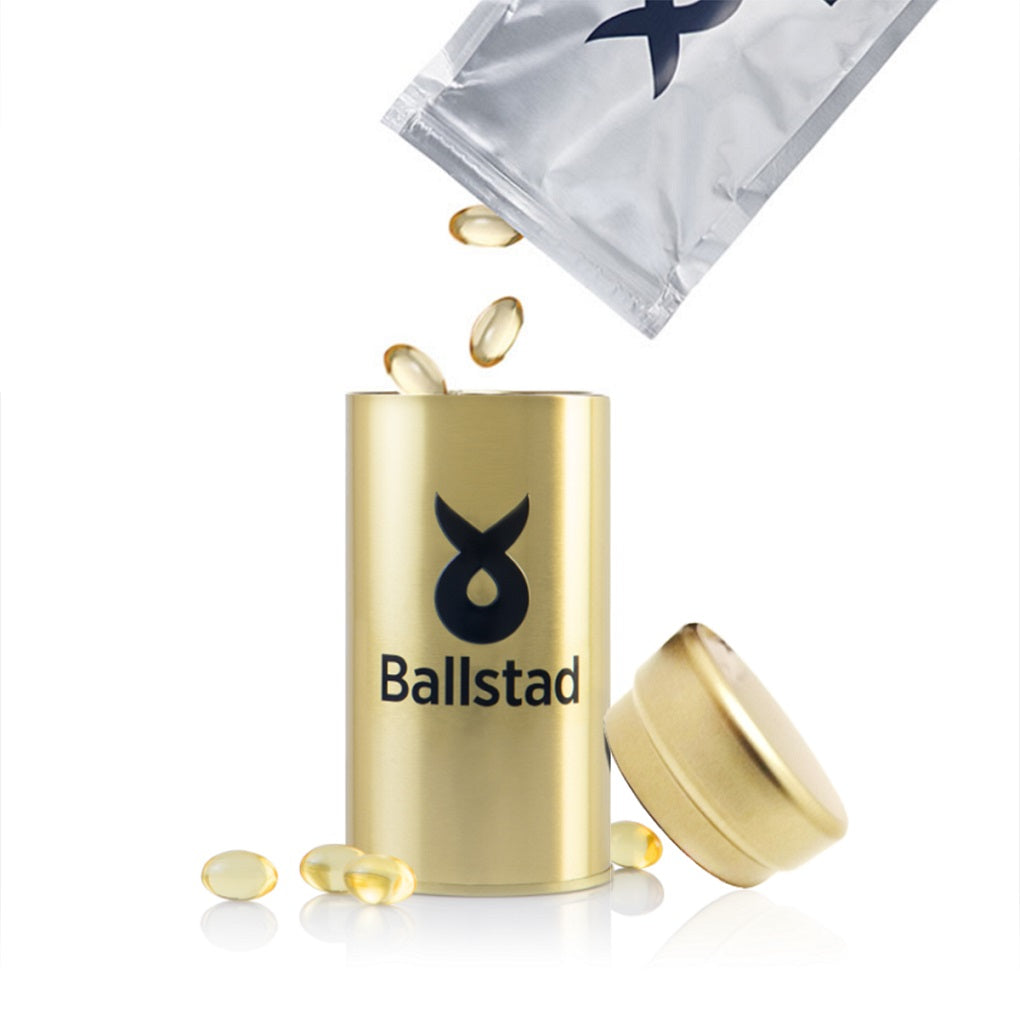
Fiskeolje – Den vanligste kilden, typisk fra ansjos, sardiner eller makrell. Rik på EPA og DHA. Dette er hva du finner i Ballstad Omega-3-kapsler.
-
Krillolje – Inneholder Omega-3 i fosfolipidform. Inneholder også naturlig astaxanthin, en antioksidant.
-
Algeolje – En vegansk, bærekraftig kilde til DHA (og noen ganger EPA). Flott for plantebasert kosthold.
-
Torskeleverolje – Inneholder Omega-3 pluss vitamin A og D, men vitamininnholdet kan variere mye.
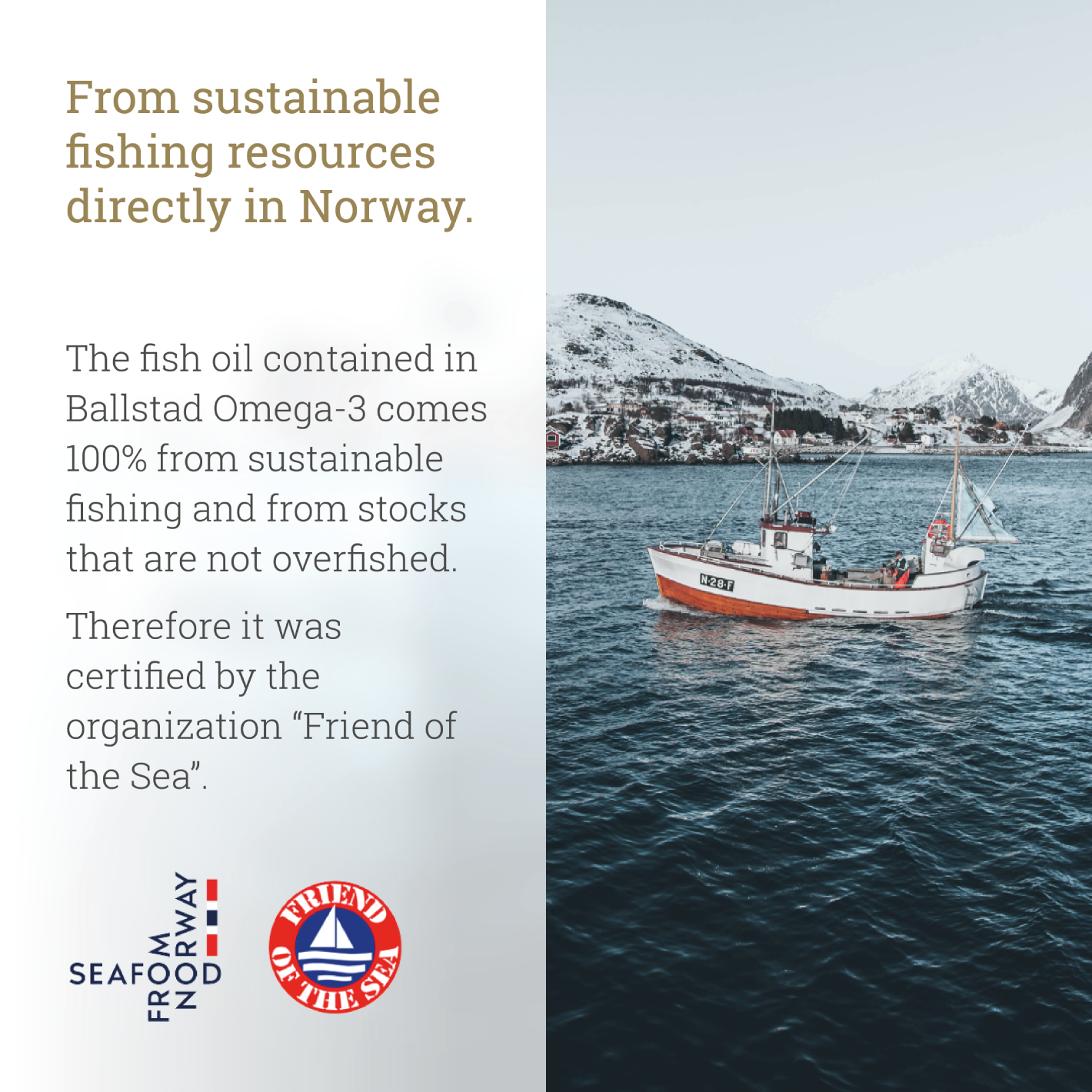
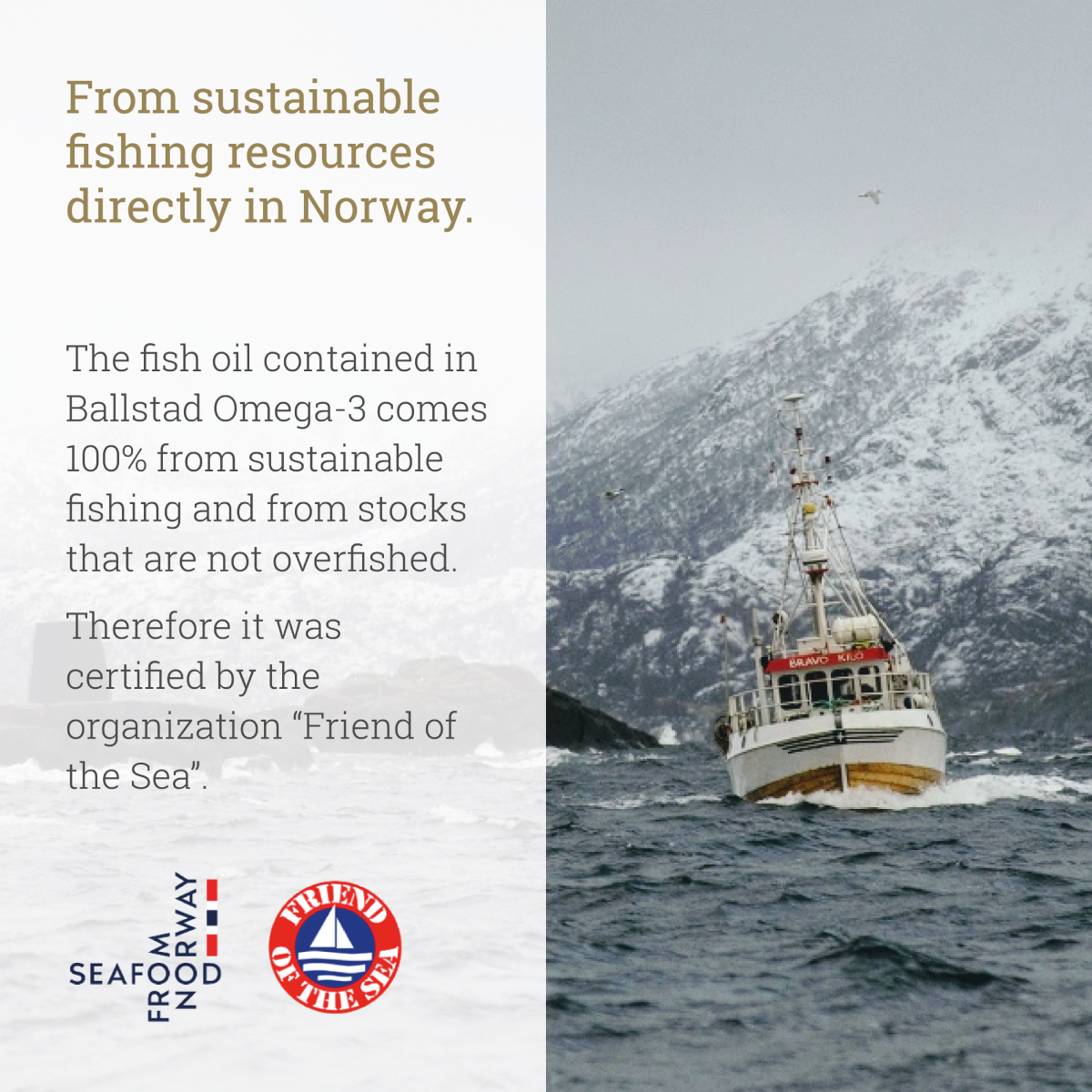
Tips: Se etter bærekraftig hentede alternativer sertifisert av organisasjoner som MSC eller Friend of the Sea.
2. Sjekk hvordan det er behandlet
Behandlingen påvirker renhet, styrke og hvor godt kroppen din kan bruke Omega-3-ene.
Viktige behandlingsmetoder
-
Naturlig triglyserid (TG) form – Ligner mest på hvordan Omega-3-er finnes i hel fisk; godt absorbert.
-
Reesterifisert triglyserid (rTG) form – Høyt renset og ofte bedre absorbert enn etylester.
-
Etylester (EE) form – Vanlig og kostnadseffektiv, men generelt mindre biotilgjengelig.
-
Fosfolipidform – Finnes i krillolje; utmerket absorpsjon.
Hvorfor det er viktig: Bedre behandling = færre forurensninger, høyere stabilitet og forbedret absorpsjon.
3. Vær oppmerksom på oksidasjonsnivåer
Omega-3 er delikate fettsyrer. De oksiderer lett, og oksiderte oljer kan lukte vondt, smake vondt og miste helsefordelene sine.
Hva du skal se etter
-
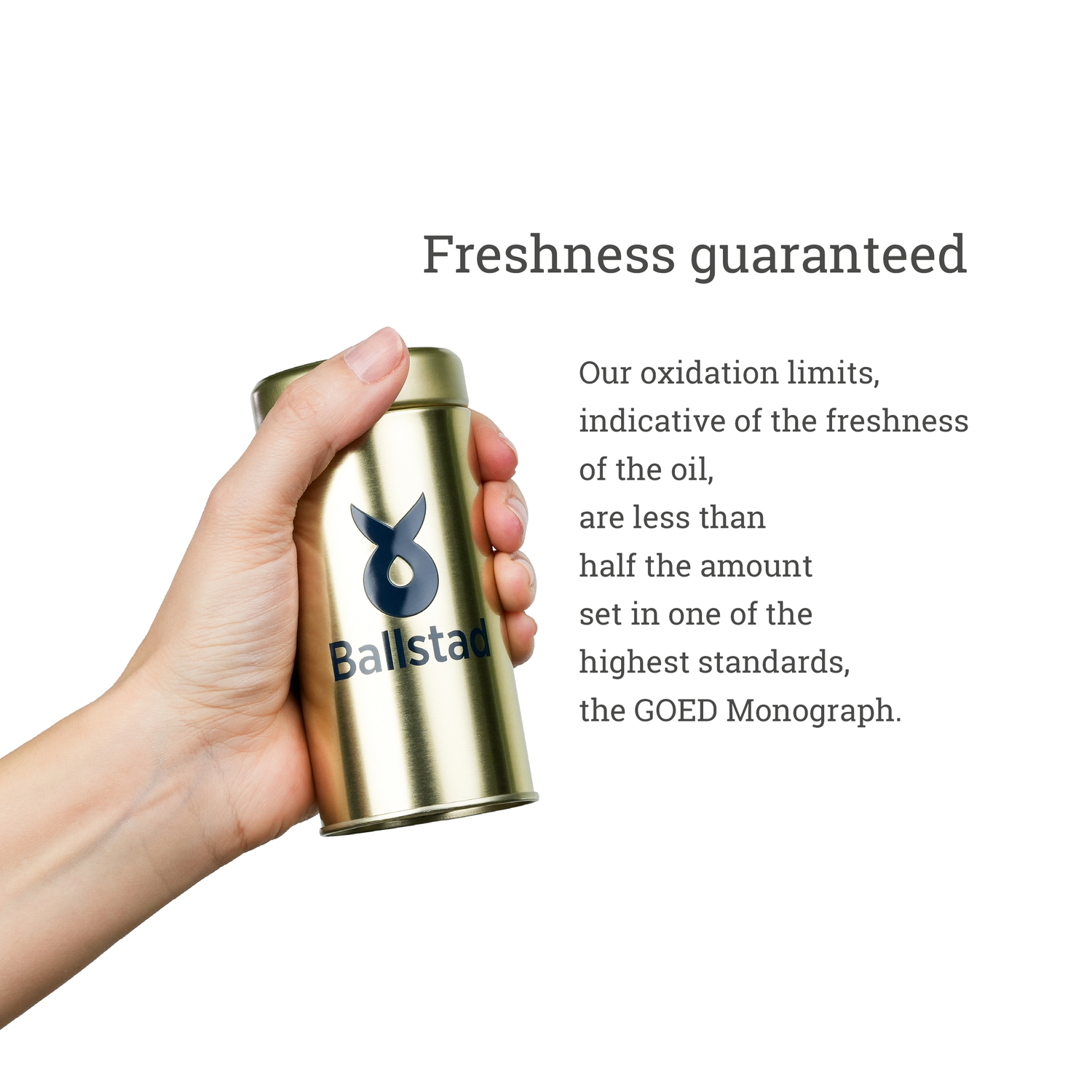
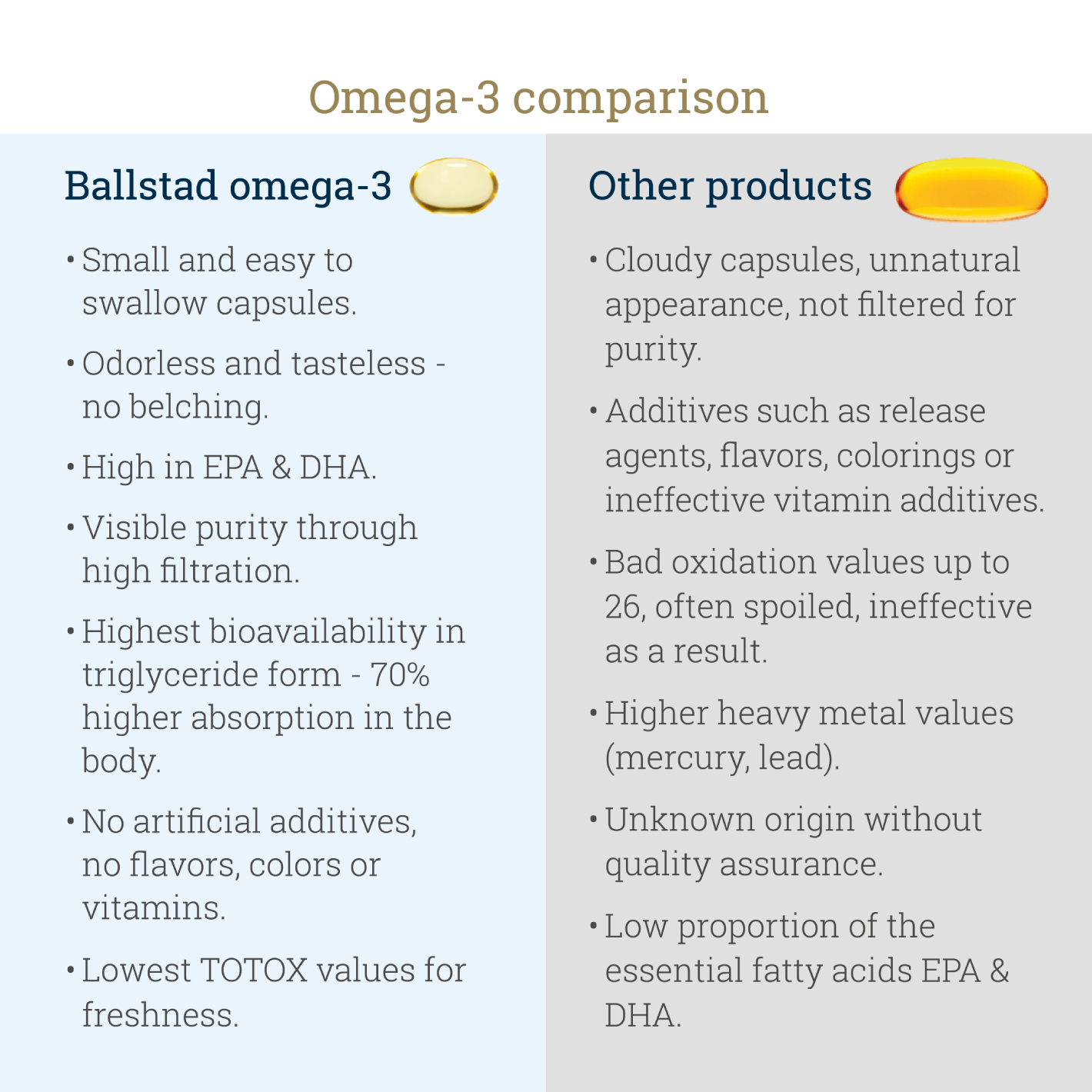
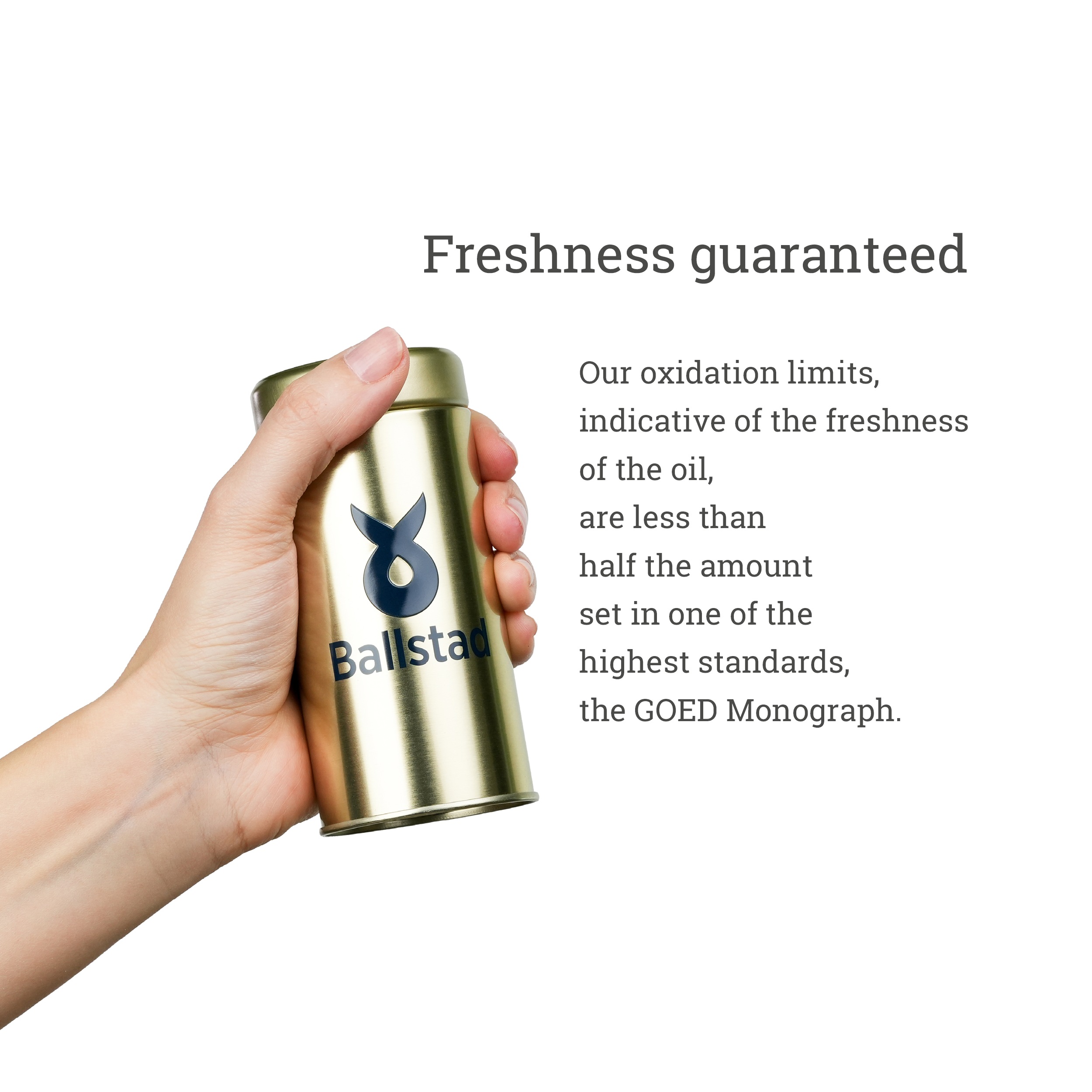
TOTOX-verdi – Et mål på oksidasjon. Lavere er bedre. Ideelt sett under 10. Ballstad Omega-3 har en TOTOX-verdi på 3.
-
Ferskhetsgarantier – Anerkjente merker publiserer ofte tredjeparts testresultater.
-
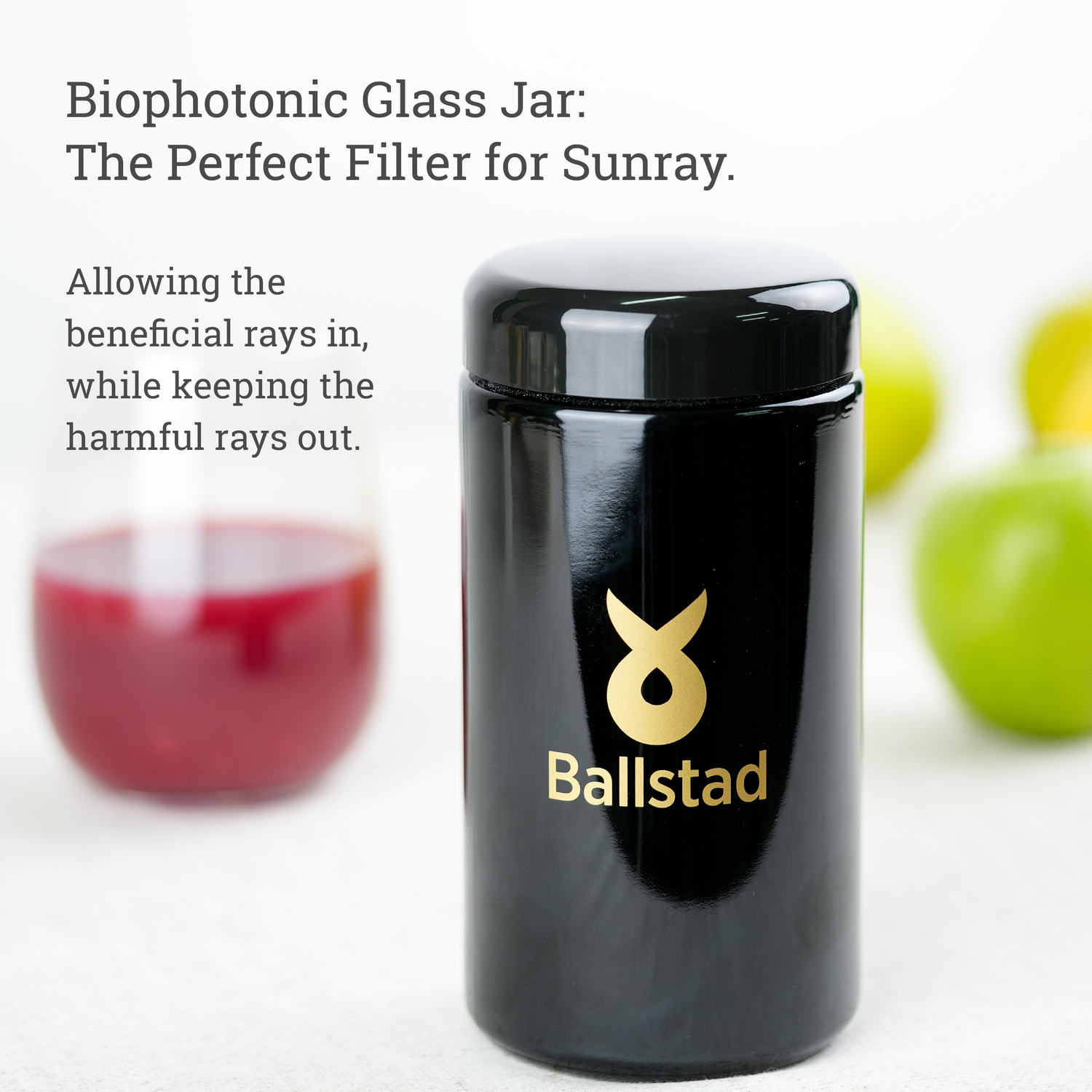
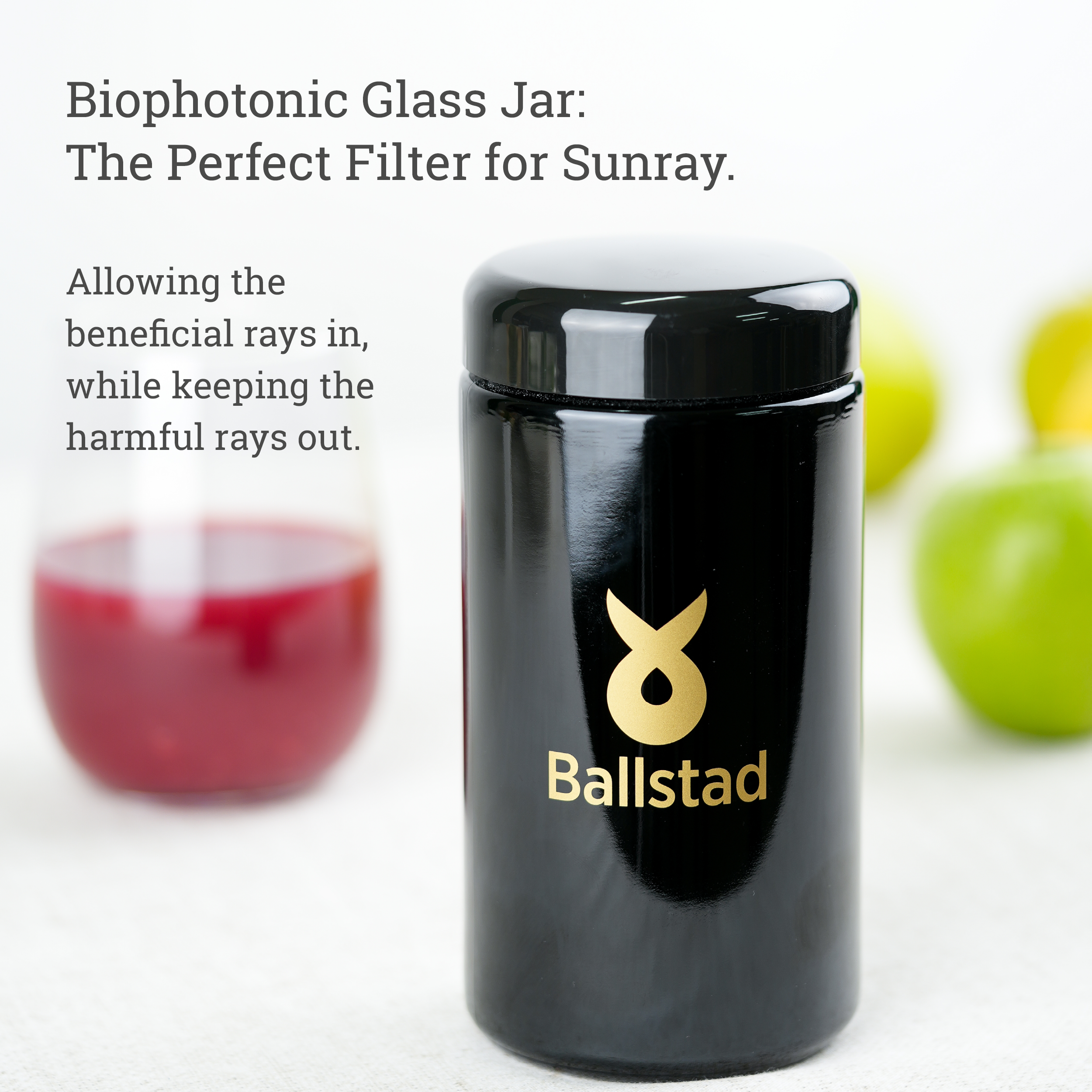
Emballasje – Mørke glassflasker eller ugjennomsiktige kapsler bidrar til å beskytte mot lys.
Hvis fiskeoljen din lukter gammel fisk, er den sannsynligvis harsk.
4. Observer farge og klarhet
Du kan lære mye bare ved å se på oljen.
Farge
-
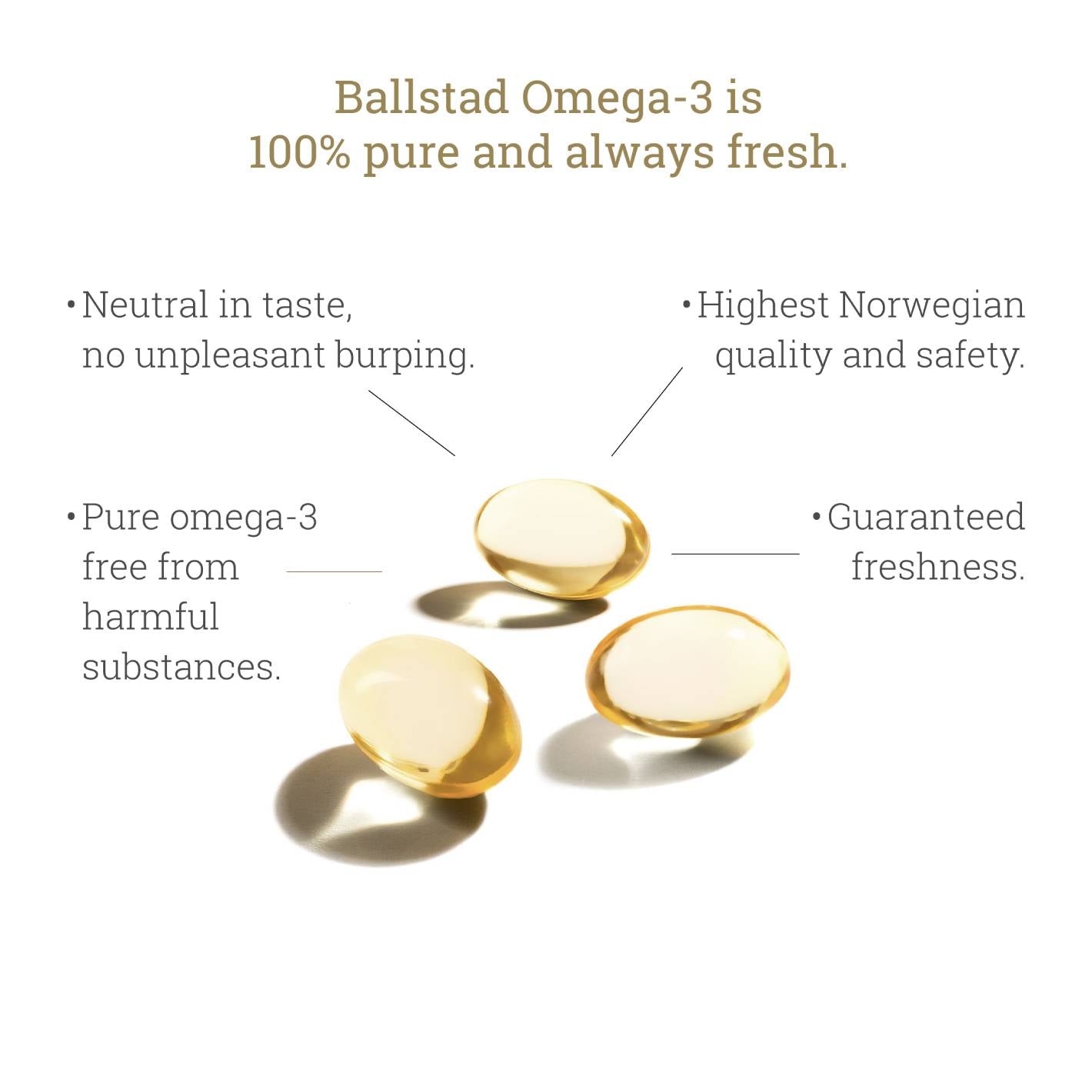
Fiskeolje – Bør være lysegul til gyllen.
-
Krillolje – Naturlig rødligh på grunn av astaxanthin.
-
Algeolje – Vanligvis blekgul.
Klarhet
-
Oljen skal være klar, ikke uklar.
-
Uklarhet kan indikere urenheter eller dårlig filtrering.
Et rent, jevnt utseende er et godt tegn på kvalitet.
5. Kjenn daglig innhold av Omega-3
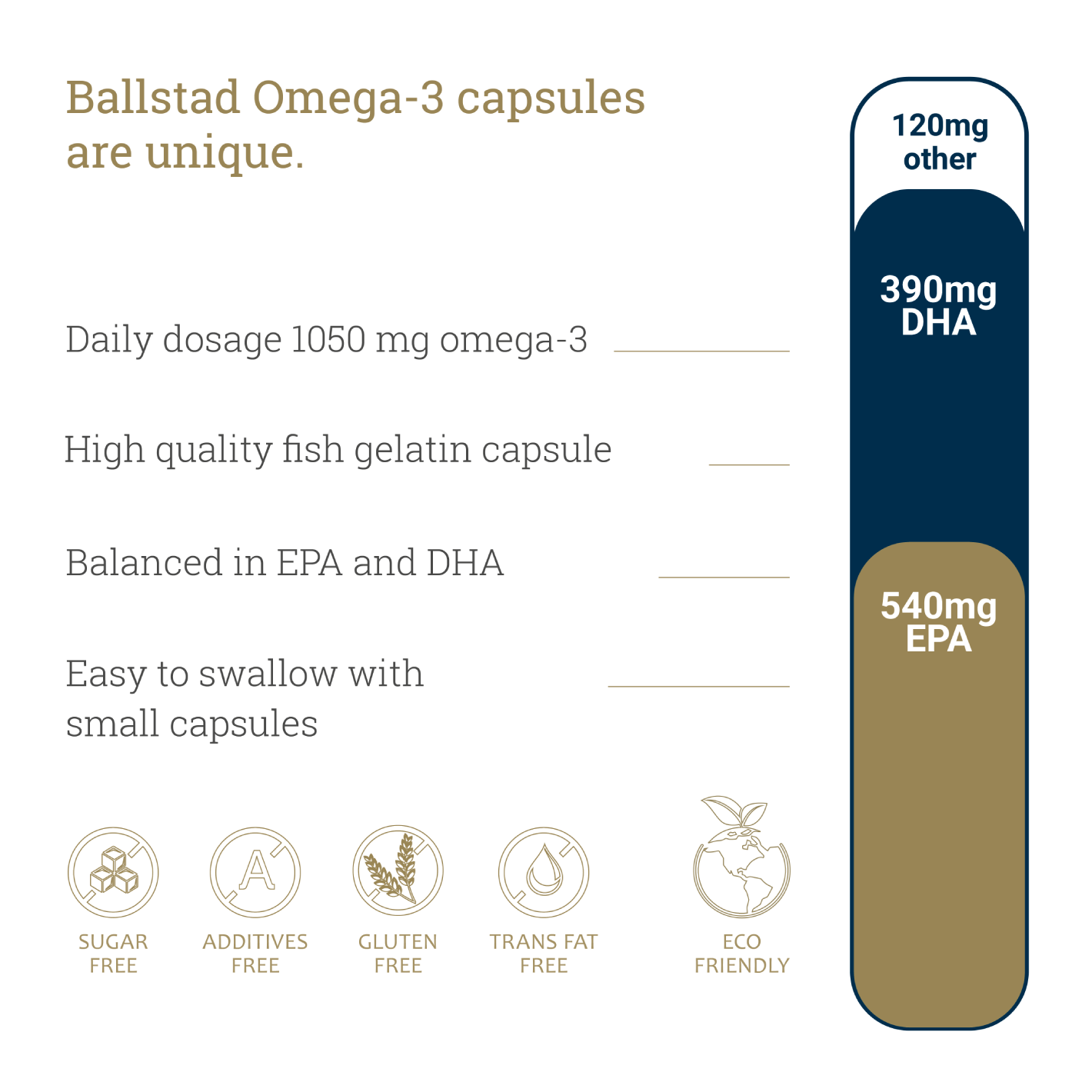
Dette er hvor mange blir villedet. Kapselstørrelsen spiller ingen rolle – EPA + DHA-innholdet gjør det.
Sjekk etiketten for:
-
EPA (eikosapentaensyre)
-
DHA (dokosaheksaensyre)
Et typisk høykvalitets tilskudd gir:
-
500–1 000 mg kombinert EPA + DHA per porsjon
Noen merker bruker store kapsler med svært lite faktisk Omega-3 inni. Sjekk alltid fordelingen, ikke bare den totale oljemengden.
Siste tanker
Å velge riktig Omega-3 trenger ikke å være komplisert. Fokuser på:
-
En ren, bærekraftig kilde
-
Høykvalitets prosessering
-
Lav oksidasjon (TOTOX)
-
Klar, friskt utseende olje
-
Transparent EPA/DHA-innhold
Når du vet hva du skal se etter, kan du hoppe over markedsføringsjargongen og velge et tilskudd som virkelig støtter helsen din. Les mer om vårt Omega-3-produkt her.
«Dette innholdet er kun til informasjonsformål og er ikke ment å diagnostisere, behandle, kurere eller forhindre sykdom.»
Vitenskapelige referanser brukt i denne artikkelen:
https://www.cambridge.org/core/journals/nutrition-research-reviews/article/sustainable-and-available-sources-of-omega3-fatty-acids-for-health-are-the-current-dietary-recommendations-food-sources-and-legislation-fit-for-purpose/82AB7220F9A7E2EC18D1620103591FE5